
What is the difference between Data Lake, Data Warehouse, Data Mart, and Lakehouse?#
Introduction#
Enterprise data platforms have moved well beyond the simple lake-versus-warehouse debate. Today you will also hear about data lakehouses, data mesh, data fabric, and layered designs such as the medallion architecture. From a database perspective, the core question is still the same: where does data live, how is it structured, and who can query it reliably?
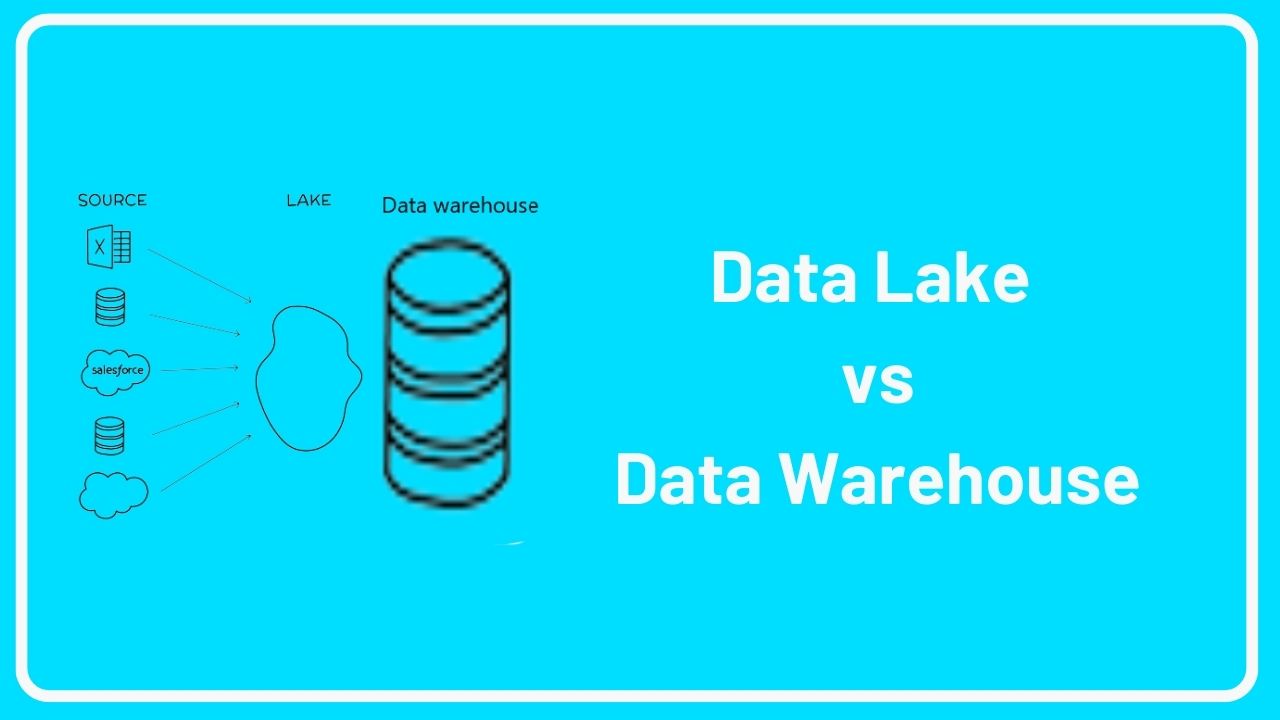
A data warehouse is a system used for reporting and analysis and is often treated as a single version of the truth. It holds a curated subset of organizational data, structured for SQL querying and BI workloads.
A data lake is a more flexible store for raw and semi-structured data. Files and objects can land in their original format and be interpreted later at read time.
A data mart is a smaller, domain-focused slice of warehouse data—sales, finance, marketing—so a team sees only the tables and metrics it needs.
A data lakehouse tries to combine the low-cost, open storage of a lake with the performance, governance, and SQL friendliness of a warehouse. Open table formats such as Apache Iceberg, Delta Lake, and Apache Hudi are what make this practical on object storage.
Data mesh and data fabric are not storage engines in the same sense. They describe how data is organized and accessed across many systems. They matter because most real organizations run more than one database type—relational, document, graph, or vector—alongside lakes and warehouses at the same time.
Data Lake vs Data Warehouse#
| Characteristics | Data Warehouse | Data Lake |
|---|---|---|
| What kind of Data? | Relational from transactional systems, operational databases, and line of business applications | Non-relational and relational from IoT devices, websites, mobile apps, social media, and corporate applications |
| When Schema is created? | Designed prior to implementation (schema-on-write) | Applied at analysis time (schema-on-read) |
| Price/Performance | Fastest query results using higher-cost storage | Lower-cost storage; query performance depends on format, indexing, and engine |
| Data Quality | Highly curated data that serves as the central version of the truth | Any data that may or may not be curated (raw data) |
| Who are the Users? | Business analysts | Data scientists, data engineers, and business analysts (using curated layers) |
| Usage | Analytics, batch reporting, BI, and visualizations | Machine learning, predictive analytics, data discovery, and profiling |
Modern Data Architectures at a Glance#
The table below extends the comparison to patterns that have become common since this article was first published.
| Characteristics | Data Mart | Data Lakehouse | Operational Data Store (ODS) | Data Mesh | Data Fabric |
|---|---|---|---|---|---|
| Primary role | Domain-specific analytics view | Unified analytics on low-cost storage | Near-real-time integrated operational copy | Decentralized ownership by business domain | Metadata-driven access across silos |
| Data shape | Filtered warehouse tables | Structured tables and files on object storage | Normalized or lightly denormalized operational data | Domain-owned data products | Virtual or federated views over many sources |
| Schema approach | Schema-on-write | Schema-on-write for curated layers; raw zone remains schema-on-read | Usually schema-on-write | Defined by each domain product | Often virtualized at query time |
| Typical users | Business teams in one function | Analysts, engineers, data scientists | Application teams, operational reporting | Domain teams with platform standards | Analysts, stewards, integration teams |
| Governance model | Inherited from warehouse | Central platform policies plus table-level controls | Application-centric | Federated: domains own data, platform enforces standards | Central catalog, lineage, and policy layer |
| Common examples | Sales mart, finance mart | Databricks Lakehouse, Snowflake, BigQuery with open tables | Staging area before warehouse load | Product catalog service, customer-360 data product | Google Dataplex, Informatica, Talend Data Fabric |
What is a Data Lakehouse?#
A data lakehouse stores data on cheap object storage—S3, Azure Data Lake Storage, Google Cloud Storage—while adding warehouse-like capabilities on top:
- ACID transactions on tables, not only on files
- Schema enforcement and time travel for curated datasets
- SQL and BI performance through columnar formats, caching, and indexing
- One copy of data for batch analytics, streaming, and machine learning
The shift is enabled by open table formats. Instead of copying parquet files into a separate warehouse database, engines read and write managed tables directly on the lake:
- Delta Lake — common in Databricks and Spark ecosystems
- Apache Iceberg — engine-neutral; used by Snowflake, Flink, Trino, Spark, and others
- Apache Hudi — strong fit for incremental upserts and change-data-capture workloads
A common layering pattern on lakehouses is the medallion architecture:
- Bronze — raw ingested data, minimal transformation
- Silver — cleaned, conformed, deduplicated data
- Gold — business-level aggregates and metrics ready for BI
That progression is how many teams avoid the data swamp problem: raw data still lands freely, but trusted tables are promoted through governed layers.
What is a Data Mesh?#
A data mesh is an organizational and architectural approach, not a database product. Instead of one central team owning all pipelines and tables, each business domain—payments, logistics, marketing—owns its data products.
From a database viewpoint, a mesh usually means:
- Multiple storage systems remain in place: OLTP databases, lakes, warehouses, and lakehouses
- Domains publish well-defined interfaces: tables, APIs, events, or contracts
- A shared data platform provides security, observability, cataloging, and standard tooling
- Consumers discover and compose data products rather than waiting on a single central warehouse team
Data mesh works best when domains are mature enough to own quality, documentation, and SLAs for the data they produce.
What is a Data Fabric?#
A data fabric is a metadata and integration layer that connects disparate databases, lakes, warehouses, SaaS systems, and streams. It does not replace those stores. It makes them easier to find, link, govern, and query.
Typical fabric capabilities include:
- Data catalog and lineage across systems
- Policy-based access control and masking
- Virtualization or federation so users query through one interface
- Automated ingestion and quality checks
If a lakehouse answers “where should curated analytics data live?”, a data fabric answers “how do we make all enterprise data discoverable and governable regardless of where it lives?”
What is an Operational Data Store?#
An operational data store (ODS) sits between transactional systems and the warehouse. It holds a current, integrated copy of operational data for reporting that must be fresher than nightly batch loads, but it is not a full historical warehouse.
ODS workloads are usually:
- Short-retention or lightly historical
- Updated continuously or near-real-time
- Queried by operational dashboards and downstream ETL into the warehouse or lakehouse
Think of the ODS as the staging ground where data is cleaned and joined before promotion into long-term analytics storage.
Software Tools by Architecture#
Data Lake and Lakehouse Platforms#
- Apache Hadoop / HDFS — early distributed storage and batch processing foundation; see also Exploring Apache Hive for SQL-on-Hadoop warehousing
- Apache Spark — distributed compute for ETL, SQL, streaming, and ML
- Amazon S3, Azure Data Lake Storage, Google Cloud Storage — object storage layers under most modern lakes and lakehouses
- Databricks — managed Spark platform closely associated with the lakehouse model and Delta Lake
- Apache Iceberg, Delta Lake, Apache Hudi — open table formats that add warehouse semantics to object storage
- Snowflake — cloud analytics platform supporting structured, semi-structured, and Iceberg tables
- Google BigQuery — serverless warehouse with native object-storage and open-table integrations
- Amazon Redshift, Azure Synapse Analytics — cloud warehouses that can query data in lakes as external or open tables
- Cloudera Data Platform — hybrid data platform spanning lake, warehouse, and streaming workloads
- Talend — open-source and commercial data integration for ingestion, quality, and governance
Data Warehouse and Analytical Databases#
- IBM DB2, Microsoft SQL Server, Oracle Database, Teradata — traditional enterprise RDBMS platforms with warehousing workloads
- MySQL, PostgreSQL, Greenplum — open-source relational engines used for smaller or specialized warehouses
- Amazon Redshift, Google BigQuery, Snowflake — cloud-native analytical databases
- SAP HANA — in-memory platform for real-time analytics
- Vertica, Exasol — columnar MPP databases optimized for analytics
Data Fabric and Catalog Tools#
- Google Dataplex — metadata, governance, and quality across Google Cloud data services
- Microsoft Purview, AWS Glue Data Catalog, Apache Atlas — enterprise catalog and lineage layers
- Informatica, Talend Data Fabric, Alation, Collibra — integration and governance suites that span multiple database and cloud systems
For a side-by-side view of how AWS, Google Cloud, and Azure map these categories to managed services, see Database and Analytics Product Services from Google, Azure, and AWS.
Why Data Lake?#
Data lakes are a strong fit for the cloud because the cloud provides performance, scalability, reliability, availability, a diverse set of analytic engines, and economies of scale. ESG research found that 39% of respondents considered cloud their primary deployment for analytics, 41% for data warehouses, and 43% for Spark/processing.
Data lakes hold relational data from operational databases / OLTP and line-of-business applications, and non-relational data from mobile apps, IoT devices, and social media. Cataloging, crawling, and indexing make that data discoverable.
The main challenge is governance. Raw data without cataloging, quality rules, and access controls becomes a data swamp. Lakehouses and medallion layering address this by keeping raw zones while promoting trusted tables through silver and gold layers.
What is Data Mart#
A data mart is a filtered (and sometimes aggregated) subsection of a data warehouse that makes it easier for a particular group to query data. It provides a smaller schema with only the relevant tables for that group—for example, separate marts for sales, accounts, marketing, security, or infrastructure data.
In lakehouse environments, a mart may be implemented as a gold-layer schema, a semantic model, or a dedicated database/schema exposed to one business unit.
Why do you build a data mart?#
- Relevance to use cases. For performance and clarity, you limit the schema to the tables a team actually needs.
- Accessibility. Data marts expose more people to data without overwhelming them with enterprise-wide models.
- Customized metrics. Different consumers may aggregate or calculate the same base data differently; marts let each group do that in its own scope.
- Easier maintenance. Domain owners can monitor smaller datasets and catch issues faster.
- Access management. Sensitive fields are easier to protect when each mart exposes only what its audience requires.
How to Choose#
There is no single winner. Most enterprises use several patterns together:
- Keep OLTP databases for transactions
- Use an ODS when operational reporting needs fresher integrated data
- Land raw and diverse datasets in a lake or lakehouse bronze layer
- Curate trusted tables in a warehouse or lakehouse gold layer
- Publish data marts or semantic models for departmental BI
- Apply data mesh principles when domain teams are ready to own data products
- Add a data fabric when catalogs, lineage, and cross-system governance become the bottleneck
If you are starting fresh in 2026, a lakehouse on object storage with open table formats is often the default analytics foundation because it reduces duplicate copies and supports SQL, streaming, and ML on the same datasets. Warehouses, marts, mesh, and fabric still matter—but usually as layers around that core storage model, not as replacements for thinking clearly about schema, quality, and ownership. For project-level trade-offs—ACID needs, scale, and SQL vs NoSQL—see Selecting Database for Project.
Related reading#
- Enterprise Data Storage series — full ordered list (Parts 1–10)
- Type of Databases — relational, NoSQL, graph, and other database families that sit beneath lakes and warehouses
- Selecting Database for Project — practical criteria for choosing a database engine for a new workload
- Database and Analytics Product Services from Google, Azure, and AWS — cloud vendor mapping for warehouses, lakes, and operational databases
- Exploring Apache Hive — SQL warehousing on Hadoop and the bridge from early data lakes to modern lakehouses
- Serverless databases — auto-scaling cloud databases used in many lakehouse and warehouse deployments
- SQL and Relational Algebra — theoretical foundation behind warehouse schemas and SQL queries
- Demystifying DevOps, MLOps, and DataOps — how DataOps practices govern pipelines that feed lakes and warehouses
- Exploring GraphDB and Neo4j — graph databases as specialized stores in a multi-database mesh
- Navigating the Data Landscape: Data Sources, Databases, and ETL Tools — ingestion paths and ETL tooling that move data into analytical storage

Comments: