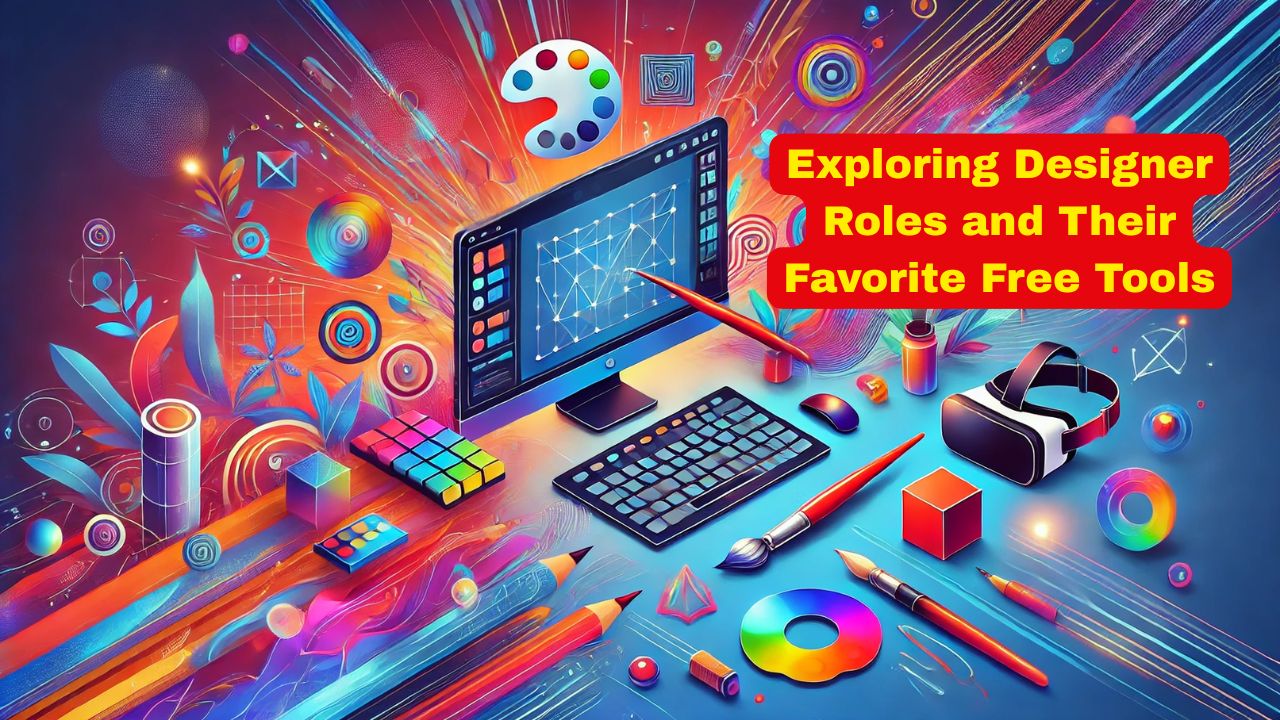
Exploring Designer Roles and Their Favorite Free Tools#
In the software business, design plays a huge role, and there are different kinds of designers, each with their own focus areas, responsibilities, and specialized tools.
What are Different Types of Designer Roles?#
1. UI Designer (User Interface Designer)#
Focus: Visual design of interfaces (buttons, icons, layout, colors, typography)
Common Tools:
- Figma
- Adobe XD
- Sketch (macOS)
- Framer
- Zeplin (for handoff)
2. UX Designer (User Experience Designer)#
Focus: User journeys, flows, wireframes, usability, research
Common Tools:
- Figma / Adobe XD (wireframes, low-fi mockups)
- Miro / Whimsical (user flows, diagrams)
- Balsamiq (low-fi wireframes)
- Maze / UsabilityHub (user testing)
- Optimal Workshop (UX research)
3. Product Designer#
Focus: Combines both UI and UX; involved in product strategy and business goals
Common Tools:
- Figma
- Notion (for product planning)
- FigJam / Miro (collaboration)
- Jira / Trello / Linear (task tracking)
- User research + analytics tools (Hotjar, Mixpanel)
4. Visual / Graphic Designer#
Focus: Branding, marketing assets, illustrations, social media visuals
Common Tools:
- Adobe Photoshop
- Adobe Illustrator
- Canva
- Affinity Designer
- CorelDRAW
5. Motion Designer / Animator#
Focus: Animations for UI, ads, videos, transitions, micro-interactions
Common Tools:
- Adobe After Effects
- Lottie / Haiku Animator
- Principle
- Rive
- Blender (3D animation)
6. Interaction Designer / IxD#
Focus: How users interact with UI elements – transitions, feedback, animations
Common Tools:
- Principle
- Figma Smart Animate
- Framer
- Rive
- ProtoPie
7. Web Designer#
Focus: Designing responsive websites, often HTML/CSS-savvy
Common Tools:
- Webflow (visual design + code export)
- Figma / Sketch
- WordPress + Elementor
- Adobe Dreamweaver (less common now)
- Bootstrap Studio
8. Brand / Identity Designer#
Focus: Logo design, brand guidelines, typography, color systems
Common Tools:
- Adobe Illustrator
- CorelDRAW
- Affinity Designer
- Figma (increasingly used for brand systems)
- LogoMakr / Looka (for fast mockups)
9. 3D Designer / Modeler#
Focus: 3D objects for games, apps, product demos, AR/VR
Common Tools:
- Blender (free & powerful)
- Autodesk Maya
- Cinema 4D
- ZBrush
- Unity / Unreal Engine (for deployment)
10. Game UI/UX Designer#
Focus: Designing UI and experience for games (HUDs, menus, interactions)
Common Tools:
- Figma / Photoshop
- Unity UI Toolkit
- Unreal UMG (UI system)
- Spine 2D (for game animations)
- Tiled (for level design)
11. Design Systems Specialist#
Focus: Creating reusable components and patterns across products
Common Tools:
- Figma (with design systems / libraries)
- Storybook (for frontend components)
- Zeroheight (design system documentation)
- Tokens Studio (for design tokens)
12. AR/VR/XR Designer#
Focus: Designing for immersive experiences
Common Tools:
- Adobe Aero
- Unity + XR Toolkit
- Gravity Sketch
- Blender
- Spark AR / Lens Studio (for Instagram/Snapchat filters)
13. Creative Technologist / Design Engineer#
Focus: Bridges design and code—turns high-fidelity prototypes into real UI components.
Tools / Skills:
- Figma + Code (React, CSS, JS)
- Storybook
- Framer (code-based prototyping)
- VS Code
- GitHub
14. Information Designer / Data Visualization Designer#
Focus: Designing dashboards, infographics, and data-driven visuals.
Tools:
- Tableau / Power BI (business dashboards)
- D3.js (custom data visuals)
- Flourish / RAWGraphs (no-code viz)
- Illustrator (for infographics)
- Google Charts / Datawrapper
15. Accessibility Designer#
Focus: Ensures designs are usable by people with disabilities (color contrast, screen reader support, etc.)
Tools:
- Stark (Figma plugin)
- Axe DevTools
- WAVE (Web Accessibility Evaluation Tool)
- Color Oracle
- Contrast Checker
16. Conversational UI Designer / Voice UX Designer#
Focus: Designs chatbots, voice interfaces (like Alexa or Siri)
Tools:
- Voiceflow
- Botmock (retired, but notable)
- Dialogflow (Google)
- Amazon Alexa Developer Console
- Figma (for flow diagrams)
17. Content Designer / UX Writer#
Focus: Microcopy, button labels, error messages, onboarding text—words that shape user experience.
Tools:
- Google Docs / Notion (collab writing)
- Figma (embedded copy in UI)
- Grammarly / Hemingway (clarity tools)
- Ditto (UX writing plugin for Figma)
18. Industrial Designer (for software-hardware products)#
Focus: Designs physical interfaces (IoT devices, wearables, hardware UI)
Tools:
- SolidWorks / Rhino
- Fusion 360
- KeyShot (rendering)
- SketchUp
- Adobe Dimension
19. Generative / AI Designer#
Focus: Uses AI to generate creative assets, iterate fast, or collaborate on ideation.
Tools:
- Midjourney / DALL·E / Stable Diffusion
- Runway ML
- Leonardo AI
- ChatGPT (for UX writing, concept gen)
- Figma AI (new features rolling in)
20. Design Ops / Systems Manager#
Focus: Improves workflow, collaboration, and scalability of design across teams.
Tools:
- Zeroheight (design documentation)
- Abstract (version control for Sketch)
- Figma Libraries
- Notion / Confluence
- Jira / Asana (for task coordination)
What are various Design Tools?#
1. UI/UX & Wireframing Tools (Free Versions)#
Web-Based:
- Figma – UI/UX design, wireframing, prototyping (free for individuals)
- Penpot – Open-source alternative to Figma (web + self-hosted)
- Uizard – Rapid wireframing and mockups with AI
- Whimsical – Free for limited boards (flowcharts, wireframes)
Desktop:
- Pencil Project – Open-source wireframing tool
- Balsamiq Wireframes (Desktop) – Limited free trial (good for sketch-style wireframes)
2. Graphic Design & Illustration#
Web-Based:
- Canva – Free plan includes templates, drag-and-drop design
- Photopea – Online Photoshop alternative (layer-based editor)
- Vectr – Basic vector design in browser
- Fotor – Photo editing and social graphics
- Pixlr X / E – Online photo editor (basic & advanced modes)
Desktop:
- Inkscape – Open-source vector editor (like Illustrator)
- Krita – Powerful open-source painting and illustration app
- Gravit Designer (Free Version) – Vector design (cross-platform)
- GIMP – Open-source raster image editor (Photoshop alternative)
- MediBang Paint – Comic and illustration tool
3. Motion Design / Animation#
Web-Based:
- Rive – Real-time motion graphics for apps (free with limits)
- Animaker – DIY animation tool (free plan available)
- LottieFiles – Preview and edit Lottie animations in browser
Desktop:
- OpenToonz – Free 2D animation software
- Blender – Open-source 3D modeling and animation suite
- Synfig Studio – Open-source 2D animation tool
4. Mockup & Asset Generators#
Web-Based:
- MockupBro – Create product mockups
- Shotsnapp – Browser-based mockup generator
- Designify – Auto-remove backgrounds and enhance images
- Remove.bg – Free background remover (limited free credits)
5. Icon, Illustration, and Asset Resources#
Web-Based:
- Heroicons / Tabler Icons – Free open-source icon sets
- UnDraw – Free MIT-licensed illustrations
- Humaaans / Open Peeps – Free illustration libraries
- SVGRepo / Iconscout (Free section) – Thousands of SVGs and icons
- Pexels / Unsplash – Free stock images for mockups/design
6. Design Systems & Collaboration#
Web-Based:
- Penpot – Team-friendly open-source design tool
- Figma (Free for teams up to 3 editors) – Includes libraries, components
- Zeroheight (Free tier) – Design system documentation
- Miro (Free plan) – Whiteboarding and brainstorming
7. Typography & Font Tools#
Web-Based:
- Google Fonts – Free web fonts
- Fontjoy / Fontpair – Font pairing tools
- Calligraphr – Turn your handwriting into a font
- DaFont / 1001 Fonts – Free downloadable fonts
What are Different Types of Transformation Styles?#
When you take a photo of a person, there are many styles you can apply to it depending on the goal—whether it’s for artistic transformation, social media enhancement, professional editing, or fun. Here’s a breakdown of different styles you can apply:
1. Artistic Styles#
- Cartoon / Anime Style – Makes the photo look like a cartoon or anime character.
- Sketch / Pencil Drawing – Converts the image into a hand-drawn pencil or charcoal sketch.
- Oil Painting / Watercolor – Simulates traditional painting techniques.
- Pop Art / Warhol Style – Bold colors and patterns, 1960s-inspired.
- Cyberpunk / Futuristic – Neon lights, glowing edges, dystopian vibe.
- Vintage / Retro – Faded colors, grain, and light leaks.
2. Portrait Enhancement#
- Beauty / Glamour Filter – Smooths skin, adjusts lighting and tones.
- Makeup Simulation – Adds virtual makeup (lipstick, eyeshadow, etc.).
- Hair Color / Style Change – Alters hair style or color digitally.
- Bokeh Background – Blurs the background to highlight the subject.
- Black & White / Monochrome – Dramatic grayscale or sepia tones.
3. Thematic / Character Transformation#
- Old Age / Baby Face / Gender Swap – FaceApp-style transformations.
- Fantasy / Sci-Fi Characters – Turns people into elves, cyborgs, or wizards.
- Zombie / Vampire / Halloween Themes – Fun horror-style edits.
4. AI-Powered Transformations#
- AI Avatars / Lensa Style – Auto-generated stylized avatars.
- Face Morphing – Blends your face with another celebrity or character.
- Cinematic Lighting / Mood – Applies dramatic lighting and film vibes.
5. Style Transfer (Neural Networks)#
- Van Gogh / Picasso / Monet Style – AI applies a painter’s style to your photo.
- Dreamlike / Abstract Art – Trippy, surreal effects with AI.
6. Social Media Filters#
- Instagram / Snapchat Filters – Cute overlays, AR effects, face distortions.
- Retro Cam / VHS Effect – Adds analog textures and timestamps.
7. Professional Styles#
- Corporate Headshot Style – Clean background, professional lighting.
- Magazine Cover Look – Glamorous edits, text overlays.
- Studio Lighting Simulation – Mimics ring lights or softbox effects.
8. Cinematic / Movie-Inspired Styles#
- Hollywood Grading – Teal and orange color tone.
- Noir Style – High contrast black and white with dramatic lighting.
- Film Emulation (Kodak, Fuji) – Mimics specific analog film stocks.
9. Cultural & Regional Styles#
- Bollywood / Indian Wedding Edit – Rich colors, glitter effects.
- K-pop / Korean Soft Look – Bright skin, pastel colors, clean tones.
- Traditional Painting Style – Like Mughal miniature, Japanese ukiyo-e, etc.
10. Conceptual / Abstract Styles#
- Double Exposure – Merges human silhouette with another scene (e.g., landscape).
- Dispersion / Pixel Explosion – Parts of the body break into particles.
- Glitch Art – Deliberate visual distortion for a cyber/retro feel.
11. Mood / Emotion-based Styles#
- Melancholic / Moody Tone – Dark tones, desaturated colors.
- Dreamy / Soft Focus – Hazy, glowing light, like daydreams.
- Energetic / Vibrant Color Splash – Bold saturation, high contrast.
12. Background Replacements & Environments#
- Virtual Locations – Place the subject on a beach, mountain, Mars, etc.
- Fantasy World / Game-Inspired – Add dragons, castles, neon cities.
- Minimalist / Solid Color Backgrounds – Clean, modern design aesthetic.
13. Motion or Live Styles#
- Cinemagraphs – Still photo with subtle motion (like hair blowing).
- 3D Parallax Effect – Gives depth and movement to a still photo.
- Photo to Video Avatars – Turn still images into animated speaking avatars.
14. Face-Only Transformations#
- Face Slimming / Eye Enhancement – Often used in beautification.
- Celebrity Look-Alike Generator – See who you resemble.
- Face Swap / Face Merge – Fun swaps with another person or character.
15. Typography and Graphics Overlay#
- Magazine Cover or Poster Layout – Add text and design.
- Memes / Captioned Styles – For social media sharing.
- Collage / Scrapbook Style – Multiple image cutouts layered with stickers and frames.
What are different free tools for different designer roles?#
| Designer Type | Free Tools |
|---|---|
| UI/UX Designer | Figma 🌐, Penpot 🌐🖥️, Uizard 🌐, Whimsical 🌐, Pencil Project 🖥️, Balsamiq (trial) 🖥️ |
| Graphic Designer | Canva 🌐, Photopea 🌐, Pixlr X/E 🌐, Fotor 🌐, Gravit Designer 🌐🖥️, GIMP 🖥️, Inkscape 🖥️ |
| Vector Illustrator | Inkscape 🖥️, Vectr 🌐🖥️, Gravit Designer 🌐🖥️, Boxy SVG 🌐, Affinity Designer (trial) 🖥️ |
| Digital Painter / Artist | Krita 🖥️, MediBang Paint 🖥️, GIMP 🖥️, Autodesk SketchBook 🖥️ |
| Motion / Interaction Designer | Rive 🌐, OpenToonz 🖥️, Synfig Studio 🖥️, Blender 🖥️, LottieFiles 🌐 |
| 3D Designer / Modeler | Blender 🖥️, Tinkercad 🌐, SketchUp Free 🌐, FreeCAD 🖥️ |
| Web Designer | Figma 🌐, Webflow 🌐, Penpot 🌐🖥️, Bootstrap Studio (limited) 🖥️, WordPress + Elementor 🌐🖥️ |
| Brand / Identity Designer | Canva 🌐, Photopea 🌐, GIMP 🖥️, Inkscape 🖥️, LogoMakr 🌐, Looka 🌐 |
| Game UI Designer | Figma 🌐, Krita 🖥️, GIMP 🖥️, Blender 🖥️, Unity (UI Toolkit) 🖥️, Unreal Engine (UMG) 🖥️ |
| Accessibility Designer | Stark (Figma Plugin) 🌐, Contrast Checker 🌐, WAVE Tool 🌐, Axe DevTools 🌐, Color Oracle 🖥️ |
| Conversational UI Designer | Voiceflow 🌐, Botpress 🌐🖥️, Dialogflow 🌐, Amazon Lex 🌐 |
| UX Researcher / Content Designer | Notion 🌐🖥️, Google Docs 🌐🖥️, Grammarly 🌐🖥️, Hemingway 🌐, Figma 🌐, Ditto (Figma Plugin) 🌐, Maze 🌐, Optimal Workshop 🌐 |
| Design System Specialist | Figma Libraries 🌐, Penpot 🌐🖥️, Zeroheight 🌐, Tokens Studio (Figma Plugin) 🌐, Storybook 🌐🖥️ |
| Creative Technologist | VS Code 🖥️, Figma 🌐, Framer 🌐, CodeSandbox 🌐, GitHub 🌐🖥️, Storybook 🌐🖥️, CodePen 🌐 |
| Data Viz / Info Designer | RAWGraphs 🌐, Datawrapper 🌐, Flourish 🌐, Google Charts 🌐, Tableau Public 🖥️, D3.js 🌐🖥️, Illustrator (trial) 🖥️ |
| AR/VR/XR Designer | Adobe Aero 🖥️, Unity 🖥️, Blender 🖥️, Spark AR 🌐🖥️, Lens Studio 🖥️, Gravity Sketch (trial) 🖥️ |
Comments: